· 5 min read · Deb Ku
Is my child ready for kindergarten? An honest checklist
Every spring I get calls from parents worried their five-year-old can't read yet. Almost none of them need to be worried about that. Reading is not a kindergarten entry requirement anywhere in Saddleback Valley or Capistrano Unified — it's what kindergarten is for.
What separates the kids who settle in from the kids who struggle in September is usually more ordinary than academics.
Want the fridge version?
I put the whole checklist on one printable page — real checkboxes, no email signup. Download the free checklist (PDF).
The skills that actually matter
If you talk to kindergarten teachers, the same short list comes up. Not letters. Stamina, hands and independence.
- Separating without a meltdown. Can your child be dropped off with a non-family adult and recover within a few minutes?
- Following two-step directions. "Put your shoes away, then come to the table" — without a reminder for each half.
- Bathroom and lunch independence. Buttons, zippers, a lunch container they can open alone. This one comes up more than any academic skill.
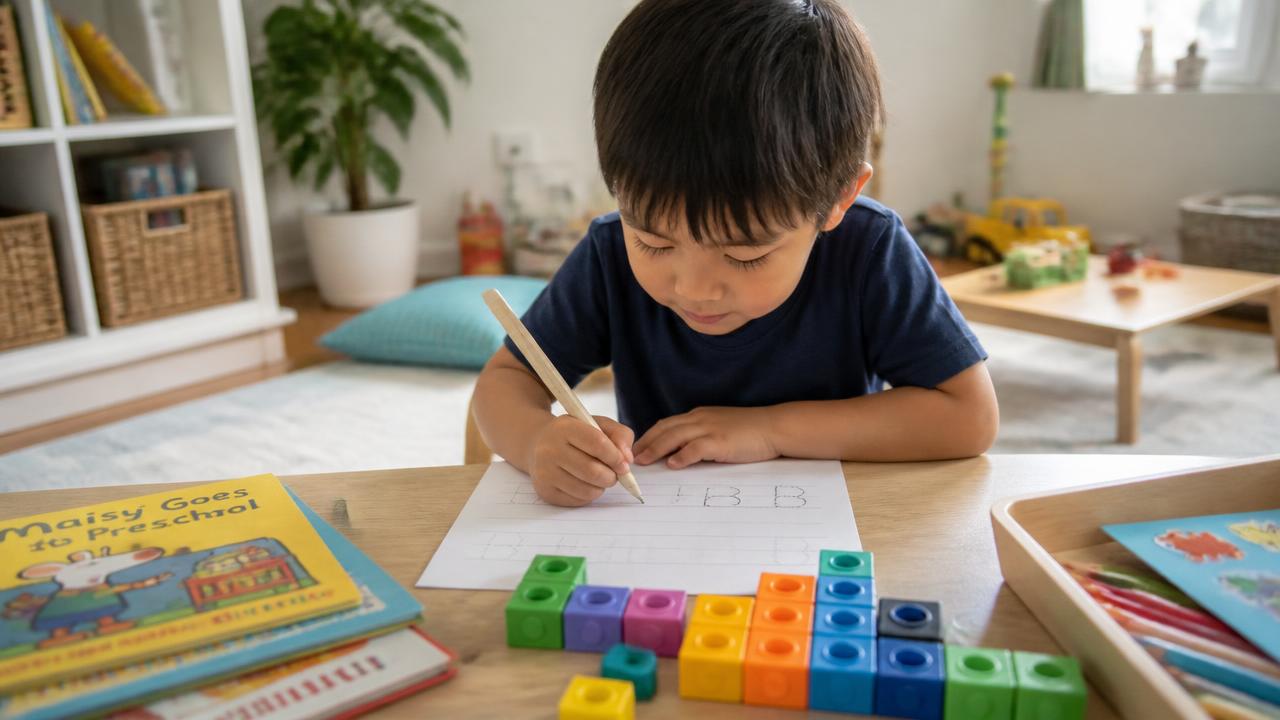
- Holding a pencil and using scissors. Fine motor control is the biggest hidden predictor of an easy first month.
- Sitting with a task for ten minutes. A puzzle, a drawing, a book. Ten minutes is plenty.
- Recognizing and writing their own name. First name only. Capital first letter, lowercase rest, if you can manage it.
The academic pieces, in the order they matter
There is a literacy and number floor, it's just lower than most parents assume. Roughly, by the first day it helps if a child can:
- Count to 20 out loud, and count 10 real objects one at a time while touching them.
- Recognize most uppercase letters, and know the sounds for a handful of them.
- Hear rhymes — cat, hat, bat — which predicts reading better than knowing the alphabet does.
- Identify basic shapes and colors.
- Retell what happened in a story you just read together.
Notice that last one. Comprehension and vocabulary come from being read to, not from flashcards, and they're the skills that show up in third-grade test scores.
What to do this summer, realistically
Twenty minutes a day is enough, and none of it has to look like school. Read a picture book and ask what the character wanted. Count strawberries into a bowl. Let them cut shapes out of junk mail. Have them write their name on the birthday card instead of you doing it. Play I-Spy with beginning sounds in the car on the way to Trader Joe's.
Push the pencil work in short bursts. A five-year-old's hand fatigues fast, and fifteen frustrating minutes of tracing does more harm than good.
When to get a second opinion
Most of what looks like a delay at four is just a birthday. A late-summer birthday in a class of kids born the previous fall is a real, temporary difference, and it usually washes out by second grade.
Worth a conversation with your pediatrician or preschool teacher if you see:
- Speech that unfamiliar adults can't understand most of the time.
- No interest in books or being read to at all, over months.
- Trouble with rhyme and beginning sounds well into the year before kindergarten.
- Frequent, intense frustration with anything requiring the hands.
Getting a look early is cheap. Waiting until second grade is not.
If you'd like help
We run early-learning sessions in South OC homes for pre-K and kindergarten students — phonemic awareness, letter sounds, number sense and pencil grip, usually in 45-minute blocks because that's all a five-year-old has in them. You can see what early learning support looks like, or ask me a question — even if the answer is "she's fine, relax," I'll tell you that.
Want to talk it through?
I answer every inquiry personally. Call (949) 388-3222 or book a free consultation — no contract, no enrollment fee.
Request Free Consultation