· 5 min read · Deb Ku
Seven signs your child needs a tutor (and three that they don't)
Parents almost always apologize when they call me. "It's probably nothing, he just had a rough quarter." Sometimes that's true. But there are a handful of patterns that, in my experience, don't resolve on their own — and a few that look alarming and almost always do.
The seven worth acting on
- Homework takes twice as long as it should. A subject that used to take twenty minutes now eats ninety. That's usually a gap, not laziness.
- Effort is up and the grade isn't. This is the clearest signal there is. A child studying harder for a worse result is studying the wrong things, and no amount of extra hours fixes that alone.
- Homework grades are fine, test grades aren't. They can do it with notes open and unlimited time. Under a clock, it's gone. That's a fluency problem, and it's very fixable.
- "I'm just bad at math." When a kid starts describing themselves as a type instead of describing a hard week, the belief becomes the ceiling.
- The teacher used the word "foundational." Teachers are careful with parents. If one tells you a skill from an earlier grade is missing, take it literally.
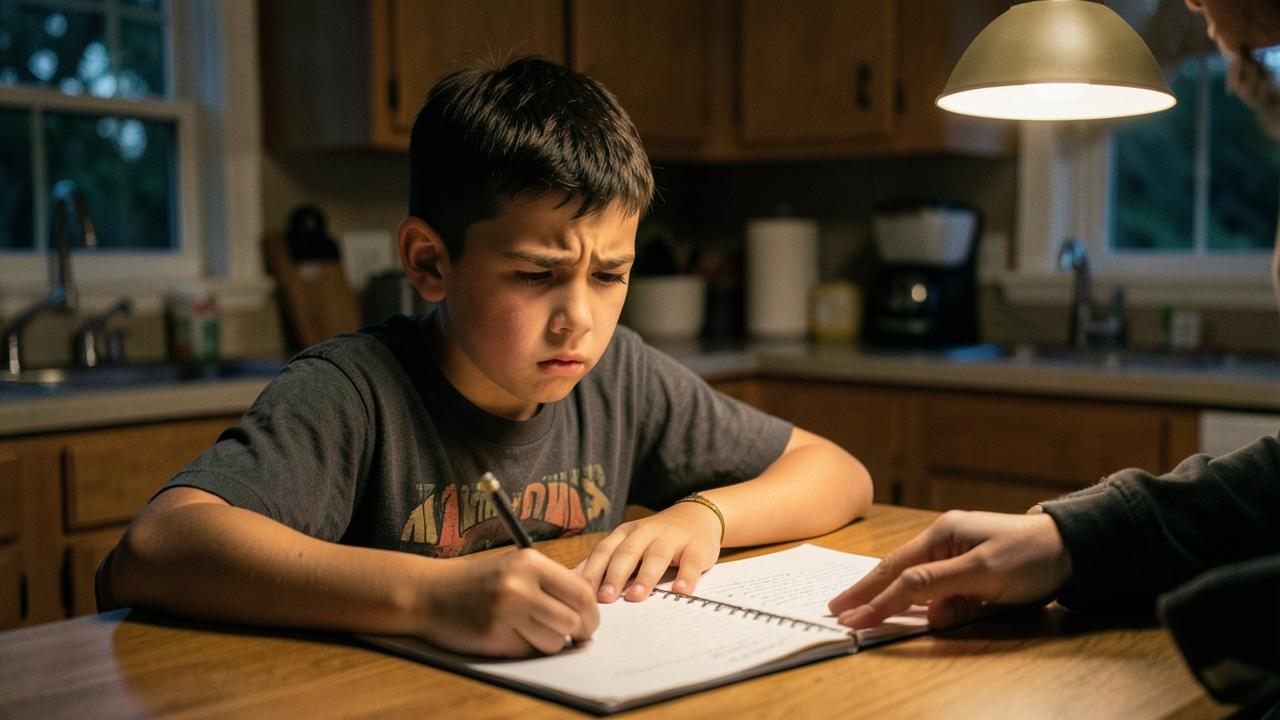
- Homework has become a family fight. When you're the enforcer every night, you can't also be the coach. Handing that role to someone else fixes the evening and the grade at the same time.
- Nothing is missing except the turning-in. Assignments done and never submitted, work lost in a backpack. That's executive function, not content — different problem, different fix.
Three that usually aren't a crisis
One bad test. Every student has a rough week. Watch the next two before you do anything.
A slow first month in a new school. Sixth and ninth grade both come with an adjustment tax. Give it through October before reading anything into it.
A kindergartener who isn't reading. Reading is what kindergarten is for, not a prerequisite. I've written a fuller checklist on what actually matters at that age.
What to try first
Before you hire anyone, email the teacher and ask one specific question: which skill is my child missing? Not "how is he doing" — teachers answer that one kindly. Then try two weeks of a fixed homework time and place, with the phone in another room. A surprising number of "grade problems" are actually attention problems wearing a costume.
If both of those are already in place and the grade still isn't moving, that's the moment to call. Waiting until the last three weeks of a semester is the single most common mistake I see, and it's the one time I genuinely can't promise much.
What happens when you do call
I ask about the last two graded assignments, the teacher, and your child's personality — that last one decides the match more than the subject does. Then I pair them with a tutor and we start, usually within 48 hours. Sessions are online, so a 7:30 p.m. slot on a Wednesday is no harder than a 4 p.m. one, and if the fit isn't right we re-match at no charge.
If the trouble is math specifically — the subject that generates more of these calls than everything else combined — start with our math tutoring. If the pattern is slow, effortful reading rather than a grade in one class, look at reading and dyslexia tutoring instead — it's a different fix.
You can also see every subject we cover or send me a note. If I think you don't need a tutor yet, I'll tell you that too.
Want to talk it through?
I answer every inquiry personally. Call (949) 388-3222 or book a free consultation — no contract, no enrollment fee.
Request Free Consultation