· 5 min read · Deb Ku
Study skills for middle school students: fixing the messy backpack
Building study skills for middle school students means shifting from doing the work to managing the work. It requires teaching a twelve-year-old how to use a physical planner, how to break a two-week project into daily tasks, and how to self-check a portal like Canvas without a parent hovering. Those three habits usually fix the immediate crisis.
I get calls from parents in Mission Viejo and Rancho Santa Margarita every October. Their sixth or seventh grader is suddenly drowning. They did fine in elementary school. Now they have six different teachers, six different sets of rules, and a backpack that looks like a paper shredder.
The parents usually ask for a math or science tutor. But when I look at the grades, the test scores are actually okay. The zeros are all missing assignments. The kid did the worksheet and left it on the kitchen counter. Or they did it, shoved it in a folder, and forgot to hand it in. That is a study skills problem.
Why sixth grade breaks the system
In elementary school, the teacher manages the time. If there is a project, it gets done in class. If there is homework, it goes in one specific folder that goes home and comes right back. The environment is a tightly controlled bubble.
Middle school pops the bubble. Teachers expect students to manage their own deadlines. The problem is that the adolescent brain is absolutely not ready for this. The frontal lobe handles executive function and planning. A seventh grader's frontal lobe is still under construction.
We expect them to track assignments on a Chromebook, remember a physical book from a locker, and coordinate it all for Friday. They literally do not have the hardware for it yet. They need an external system to bridge the gap. That is what we are actually teaching when we talk about study skills.
The physical planner versus the portal
Most local schools use an online portal now. Canvas, Google Classroom, Aeries. Parents log in and see a wall of red missing assignments. The immediate reaction is to tell the student to just look at the portal every day.
That rarely works. The portal is a passive list. It does not help a student plan. It just tells you what is already late.
A major part of our foundational tutoring is forcing the use of a physical planner. Writing things down on paper does something to the brain. It makes the deadline real. It forces the student to look at the physical space a week takes up on a page.
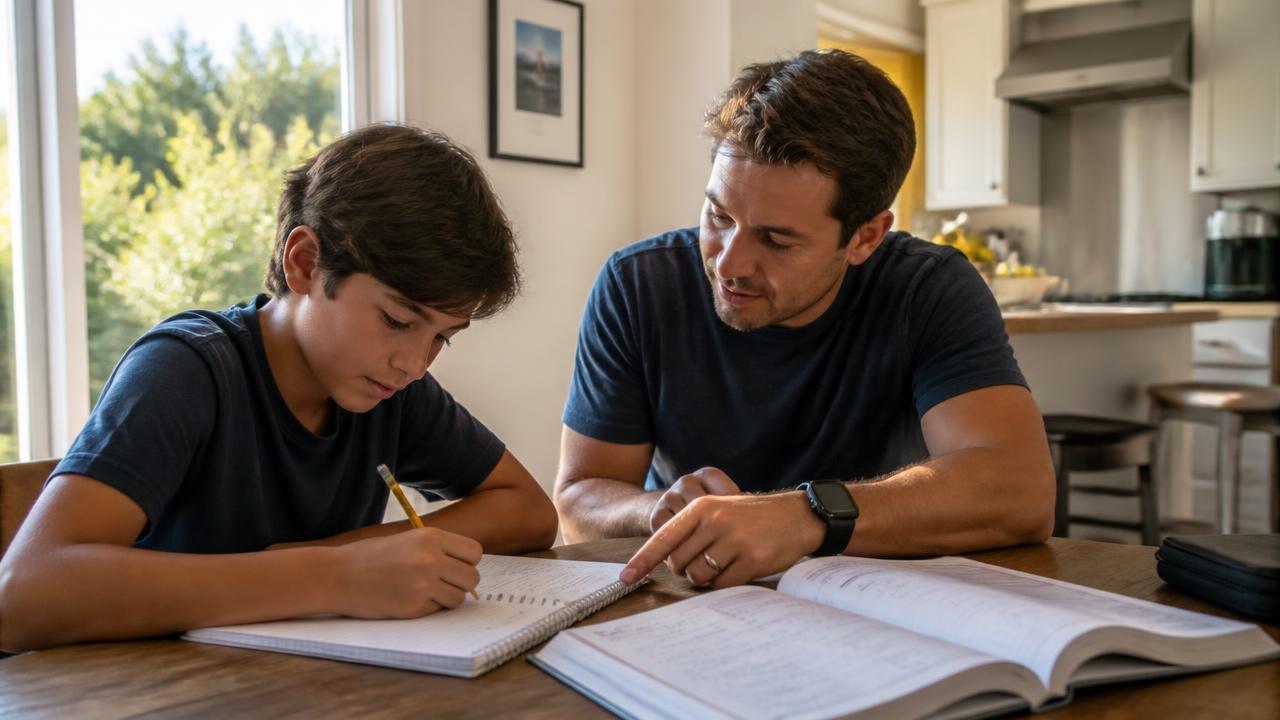
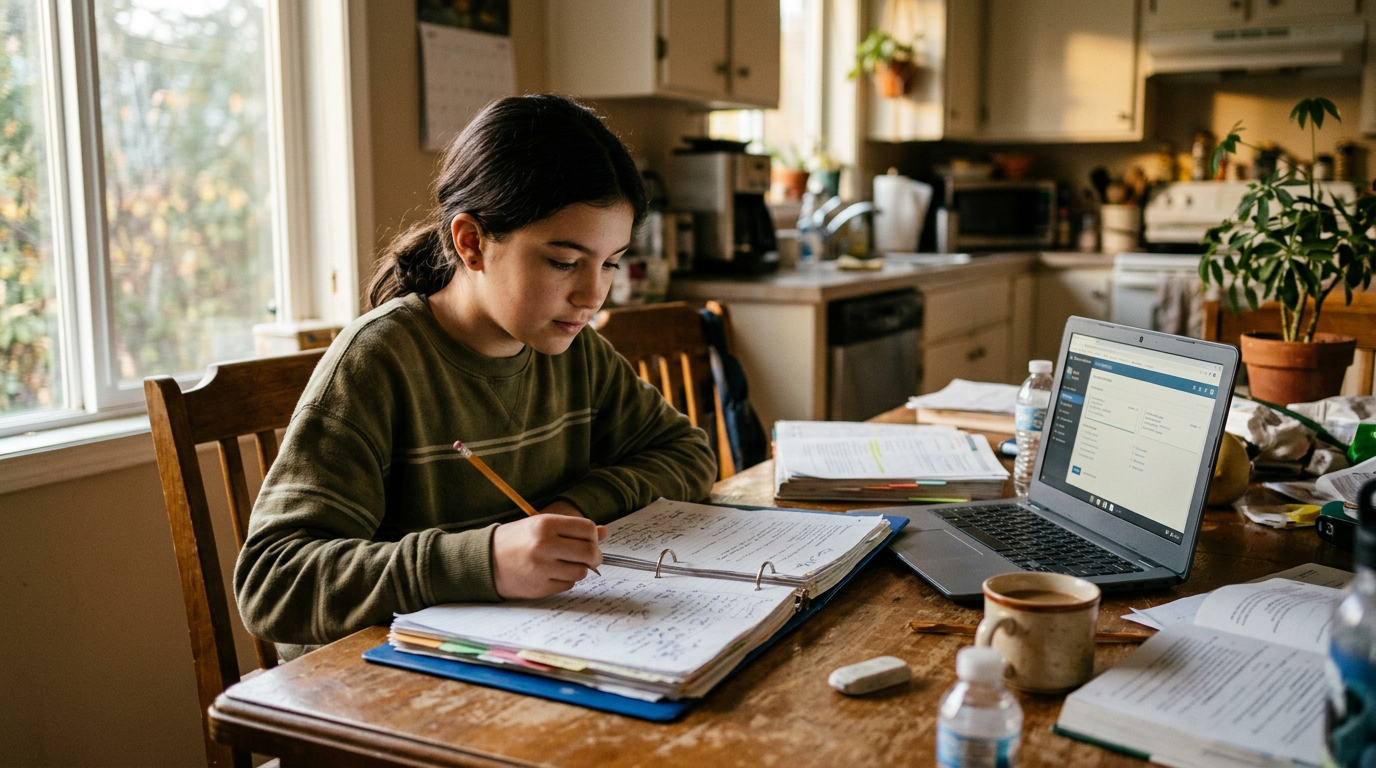
Our tutors sit down with the student on a Zoom call or at the kitchen table. They make the student open the portal. Then they make the student physically write every upcoming assignment into a paper planner. If a history paper is due Thursday, they write it on Thursday. But they also have to write that they will finish the rough draft on Tuesday. The student has to do the writing. If the tutor or the parent does it, the habit does not stick.
What an actual study session looks like
Parents often ask what a tutor actually does for a whole hour if there is no specific math worksheet due the next day. We do not just talk about studying in theory. We actually do the homework together, but the focus is entirely on the process.
First, we do the backpack dump. We sort the loose papers. If a tutor is working in-home in Ladera Ranch or Aliso Viejo, they are literally sitting on the floor sorting the crumpled papers. If we are online, the student is holding papers up to the camera and filing them in a binder while the tutor watches. We figure out what is trash, what needs to be turned in, and what needs to stay home.
Then we look at the week ahead. We build a daily schedule. We figure out exactly what time homework is going to happen on Tuesday when soccer practice runs late.
Finally, we tackle studying for an actual test. Staring at a textbook or rereading highlighted notes is a waste of time. We teach active recall. We show them how to cover the vocabulary word and force their brain to retrieve the definition. If they cannot pull it from memory, they do not know it yet. We drill that habit until they do it automatically.
When tutoring is not the answer
Sometimes study skills tutoring is the wrong move. I will be up front with parents when they call from Coto de Caza or Lake Forest expecting a miracle.
If a student is severely depressed or dealing with a major anxiety disorder, an academic tutor cannot fix that. You need a therapist first. Pushing a kid to use a planner when they cannot get out of bed is just cruel. We are not mental health professionals.
Another red flag is when the parent cares a hundred times more than the student. If an eighth grader absolutely refuses to log on or open a book, paying me to fight with your teenager for an hour a week is a waste of your money. We charge a flat hourly rate with no contract, and parents can call for a quote anytime. But I do not want to bill you for a screaming match. We need at least a tiny bit of buy-in from the student to make progress.
The timeline for building the habit
Study skills take time. This is not cramming for a Friday quiz. You are trying to overwrite bad habits with good ones, and human beings resist change.
The first two weeks are usually rough. The student resents the new system. They will say the paper planner is stupid. They will claim they can just remember it all in their head. The six missing assignments in Aeries prove otherwise, but they will still argue.
By week four, the friction usually drops. They start realizing that writing things down actually gets their parents off their back. The stress in the house goes down. They know what is due, so they can actually relax when they play video games instead of waiting for someone to yell at them.
By month three, the system starts to run on autopilot. They are checking Canvas on their own. They know where their math book is. That is the goal. A good study skills tutor wants to make themselves obsolete.
How to start the process tonight
Fixing middle school organization is a heavy lift for a parent. The dynamic is all wrong. When you ask them to clean out their binder, it sounds like nagging. When a twenty-two-year-old college student on a webcam asks them to do it, it is just an assignment.
That distance is incredibly valuable. It removes the emotional weight from homework hour. But there are a few things you can start doing tonight, before you even hire outside help.
- Buy a simple paper planner that has large daily squares
- Set a dedicated time every Sunday evening just to look at the week ahead
- Stop asking if they have homework and start asking to see what they wrote down
- Let them experience the natural consequence of a zero on a small daily assignment
If you have tried all that and it is still a battleground at dinner time, we can probably help. We can provide that neutral third party to enforce the structure without the emotional baggage. If you are in South Orange County, you can contact us to talk about what is going wrong. We can figure out if your child needs a subject expert or just someone to teach them how to open a binder.
Want to talk it through?
I answer every inquiry personally. Call (949) 388-3222 or book a free consultation — no contract, no enrollment fee.
Request Free Consultation